The Camino de Santiago is an ancient route followed by millions of pilgrims since the beginning of the 9th century, when the tomb of the Apostle James the Greater was discovered. Since then, people from diverse backgrounds have walked the paths that lead to the Cathedral where the relics of the Holy Apostle are venerated, giving rise to a phenomenon that continues and grows stronger every day.
Pilgrimages to Santiago de Compostela from Portugal intensified in the 12th century with the country's independence, thus gaining particular importance along the royal road between Porto/Barcelos/Ponte de Lima/Valença, where almost all the others converge, reinforcing this route as the backbone of the Portuguese Camino de Santiago.
This was the route chosen by most pilgrims who made their way to Santiago, at least from the beginning of the 19th century onward. XIV century, as is well demonstrated by the numerous accounts preserved in the archives of Santiago de Compostela and the known references to its most illustrious pilgrims: Queen Saint Isabel, Leon of Rotzmithal, Jerónmo Münzer, King Manuel, Confalonieri, Albani, and probably also Saint Francis of Assisi, Blessed Francisco Pacheco, and so many other distinguished pilgrims not recorded in memory. Indeed, with the completion of the Barcelos bridge in 1325 and the remodeling of the Ponte de Lima bridge around the same time, it was possible to create a straight route that avoided the detour through Braga and the crossing of the most dangerous rivers by ford or boat.
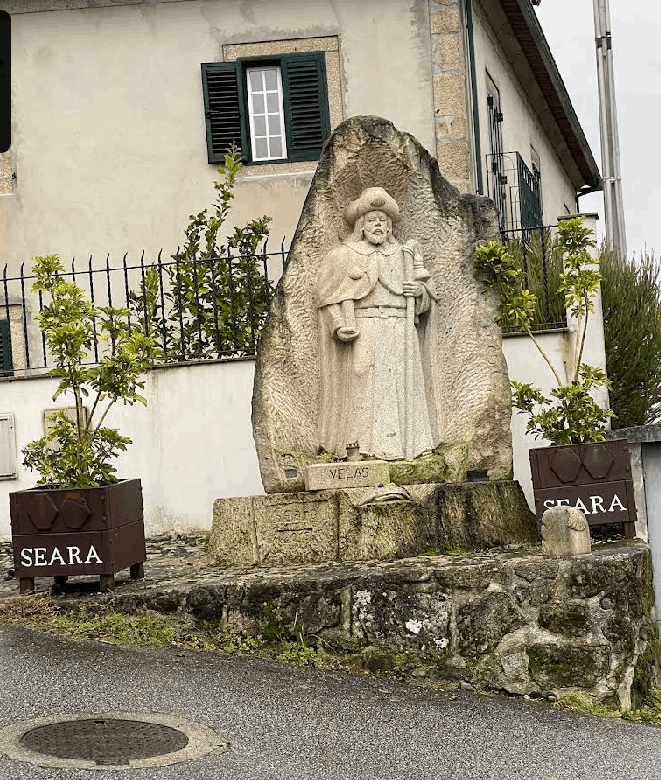
Rates, Barcelos, Seara, Ponte de Lima, Valença, Tui, Redondela, Pontevedra and Caldas de Reis defined the new medieval route from Porto to Santiago, having in common with the old Roman military route only one or two urban stretches and the bridges still in use to cross the most turbulent rivers.